Pedal Assist vs Throttle E-Bikes: What Is the Difference?
When you shop for an electric bike you will hear two terms again and again: pedal assist and throttle. They describe how the motor decides to help you, and the difference changes how the bike feels, how far it goes and, in Australia, whether it is legal on public roads. This guide explains how a pedal assist electric bike works, what a throttle does, why sensors matter and how to choose.
What is pedal assist?
On a pedal assist e-bike, sometimes called a pedelec, the motor only helps while you pedal. A sensor detects that you are turning the cranks and tells the controller to add power. The amount of help depends on the assist level you choose, typically from a low eco setting to a high turbo setting. Stop pedalling and the motor stops. On compliant bikes the assistance also cuts out at 25 km/h.
What is a throttle?
A throttle works like a twist grip or thumb lever on a scooter. When you operate it, the motor drives the bike without you pedalling. Throttles can be convenient for starting from a standstill, moving a heavy bike and giving your legs a rest, but they use more battery and, in many places, are restricted by law.
How sensors change the ride
Pedal assist bikes use one of two types of sensor, and the difference is something you can feel:
- Cadence sensor. It detects that the pedals are turning and applies a set level of assistance. It is simple and inexpensive, but can feel slightly abrupt, like an on-off switch.
- Torque sensor. It measures how hard you press on the pedals and delivers assistance in proportion. The ride feels smoother and more natural, as if you have stronger legs. Torque sensors are common on higher-priced bikes.
If you can, choose a torque sensor for a more natural feel. If budget matters more, a cadence sensor is still a good way to get help on hills.
What do the rules say in Australia?
The national standard for e-bikes is EN 15194. For a bike to be treated as a bicycle it must have a motor of up to 250 watts continuous power, assistance that cuts out at 25 km/h and assistance only while you pedal. A low-speed walk assist of up to about 6 km/h is permitted to help you push the bike. A throttle that drives the bike at higher speeds, without pedalling, can make the bike non-compliant in many states. Each state sets its own rules on power, age and where you can ride, so check your state transport authority. Our e-bike laws guide explains the details.
Advantages of pedal assist
- Longer range. You use less battery because the motor only helps when you pedal.
- A natural, bike-like ride with exercise built in.
- Compliance. Pedal assist bikes built to EN 15194 are the standard for roads and shared paths.
- Control. The assist levels let you decide how much help you want.
Advantages and drawbacks of a throttle
Advantages: easy starts, help when you are tired, and a useful feature for riders who cannot pedal hard. Drawbacks: higher battery use, more rules and the risk that a bike with a high-speed throttle is not legal on public roads in your state.
Which should you choose?
- Commuters and everyday riders: pedal assist, ideally with a torque sensor.
- Trail riders: pedal assist with strong low-speed torque.
- Cargo and family riders: pedal assist with a walk assist function for pushing a loaded bike.
- Riders with limited leg strength: talk to us about bikes with strong assist and walk assist, and check your state rules.
Real examples from our range
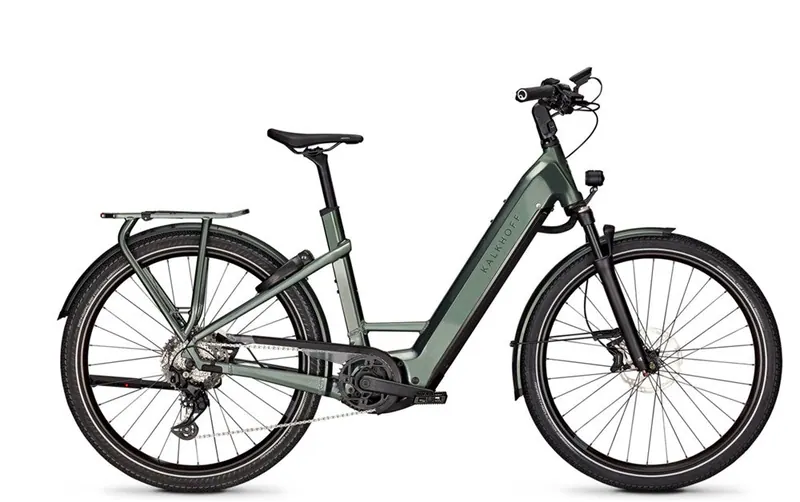
All our bikes are described on the product page, including the motor details. For example, commuters such as the Kalkhoff Endeavour 7B Move+ 750w at $7,499 and the Trek Allant+ 7 Lowstep at $4,999 are pedal assist bikes. Mountain bikes such as the Trek Rail 5 at $5,999 are also pedal assist. Browse electric commuter bikes and electric mountain bikes and read the motor details before you buy.
Assist levels explained
Most pedal assist bikes offer several levels, often labelled eco, tour, sport and turbo, or low to high. Lower levels save battery and give a gentle push. Higher levels give more power for hills, headwinds and heavy loads. Use the lowest level that gets you where you need to go for the best range, and save the highest for the toughest climbs.
Walk assist and start assist
Many bikes include a walk assist mode, which drives the bike at a very low speed, typically no more than about 6 km/h, while you push it. It is helpful when you are wheeling a heavy bike up a ramp or a steep path. Some bikes also have start assist, which gives a short burst of help from a standstill. These features are permitted within the national standard, as long as they stay within the low-speed limit.
The controller and display
The controller is the bike's brain. It reads the sensors, decides how much power to deliver and protects the motor and battery. The display and control unit on the handlebar let you change assist level, see speed and battery level and switch on lights. Look for a display that is easy to read in sunlight and simple to operate while riding.
Assist features that matter on hills
On steep climbs, torque matters more than top speed. A motor with strong low-speed torque lets you climb without grinding. Match the assist level to the hill, shift to an easier gear and keep a steady cadence. A bigger battery gives you more reserve for hilly routes.
If you are not very fit
Pedal assist is a great way to get back into exercise. You choose how much effort you put in, and the motor takes up the rest, which makes longer rides and hills achievable. Start with a low assist level and increase it as you need. If you have a medical condition, check with your doctor and with our team about the best bike for you.
Servicing the drive system
Most modern drive systems need little maintenance, but they still benefit from a regular check. Keep connectors clean and dry, make sure the display and wiring are secure, keep the chain and gears clean and lubricated and update any software the manufacturer recommends. If you notice a fault or an error code, contact the manufacturer or our team.
Getting the best range
- Use a lower assist level on flat roads.
- Pedal smoothly and change gears so the motor is not working hard at low cadence.
- Keep tyres pumped up.
- Carry only what you need.
- Look after the battery: see our battery care guide.
Common myths
Myth: pedal assist e-bikes do all the work. In fact you still pedal, and the exercise is real. Myth: a throttle e-bike is always illegal. A small walk assist is permitted, and rules vary, so check your state. Myth: more watts is always better. For road use the standard limits you to 250W continuous, and a well-designed drive system matters more than a headline number.
Questions to ask before you buy
- Does the motor assist only while I pedal?
- What type of sensor does the bike use?
- Is there a walk assist function and what is its limit?
- Does the bike meet the EN 15194 standard?
- What are the rules in my state?
Frequently asked questions
Is a pedal assist e-bike hard to ride? No. It feels like a regular bike with a helpful tailwind.
Can I add a throttle to my bike? Modifying a compliant bike can make it illegal and may affect your warranty. Check your state rules first.
Which type uses more battery? A throttle typically uses more battery than pedal assist on the same ride.
Do you sell pedal assist bikes with a warranty? Yes. Every bike includes a 2-year warranty and free delivery across Australia.
Ready to choose?
Browse electric bikes for sale, or ask our team which bike suits your riding and your state rules. Pay by bank transfer, Osko or crypto to save 10%.
New to e-bikes? Read our list of the best electric bikes for beginners in Australia.
Get a free quote
Tell us the bike you have in mind and your delivery postcode. Our Australian team replies with the delivered price, including free delivery and the 10% bank transfer, Osko or crypto discount.
Ready to find your perfect electric bicycle?
Explore our range with 100% free delivery across Australia.
Related Australian Cycling Guides
How Far Can an E-Bike Go? Battery Range Explained
How far will an electric bike go on one charge? Learn what controls e-bike range, how to estimate it from watt-hours and how to get more kilometres from every charge.
E-Bike Battery Guide: Volts, Amp Hours and Watt Hours
Understand e-bike batteries: volts, amp hours and watt hours, how to match a battery and charger to your bike and how to choose a replacement or range extender.